The Littmann Master Cardiology and Cardiology IV are both premium cardiology stethoscopes with dual-lumen tubing, a 69 cm tube and a 7-year warranty. The difference is the chestpiece. The Master Cardiology has one side with a single tunable diaphragm; the Cardiology IV has tunable adult and paediatric sides, and the small side converts to an open bell.
The short answer
- Examine children, thin patients or carotids, or want a true bell: choose the Cardiology IV.
- Mostly adult hearts and lungs, and you like one flat chestpiece you never turn over: choose the Master Cardiology.
- Same 69 cm dual-lumen tubing, same 7-year warranty, similar premium price.
- Different spares: 40011 for the Master Cardiology, 40016 or 40017 for the Cardiology IV.
Master Cardiology vs Cardiology IV at a glance
Side by side
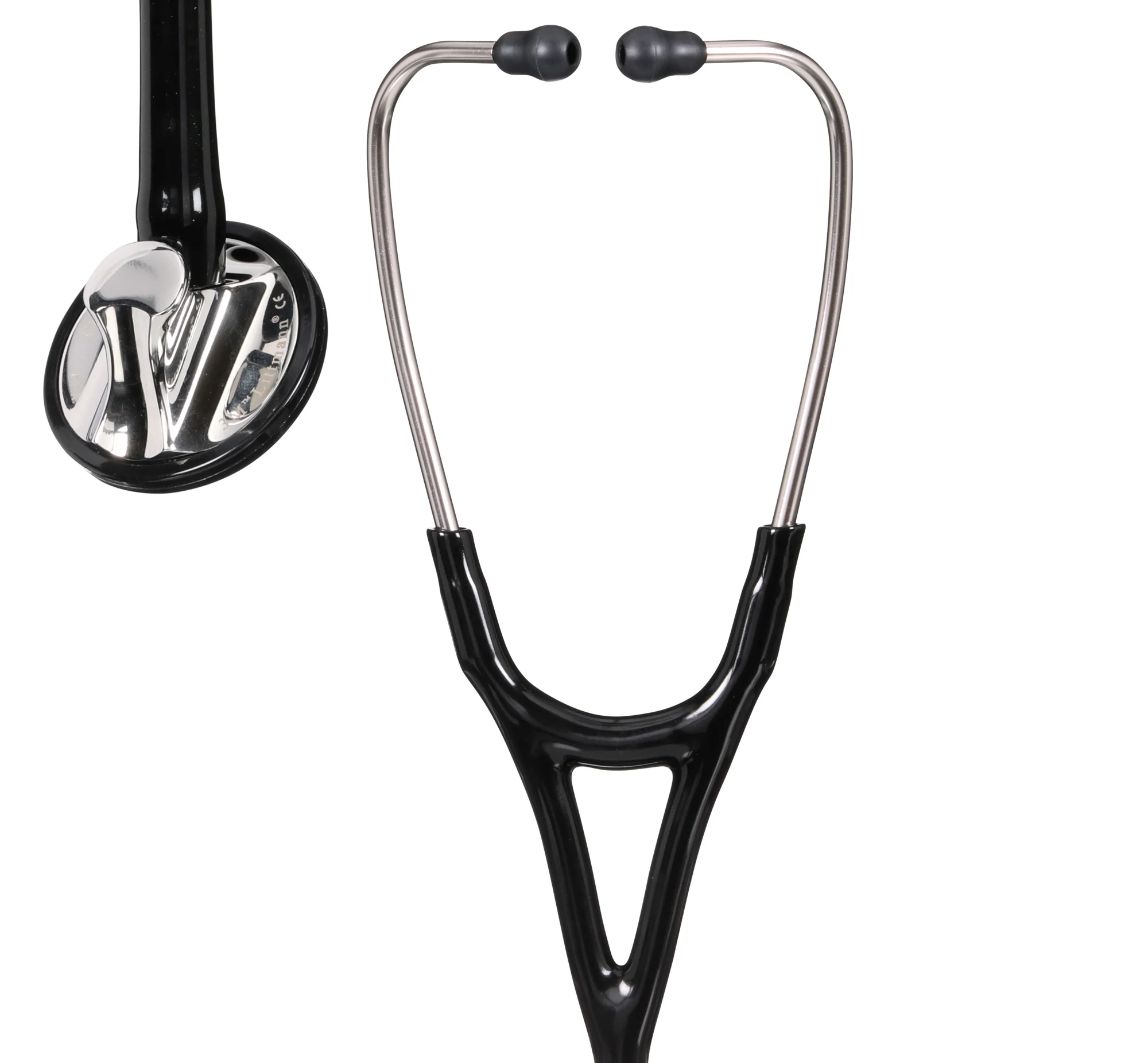 One-sided Master CardiologyR4 749 | 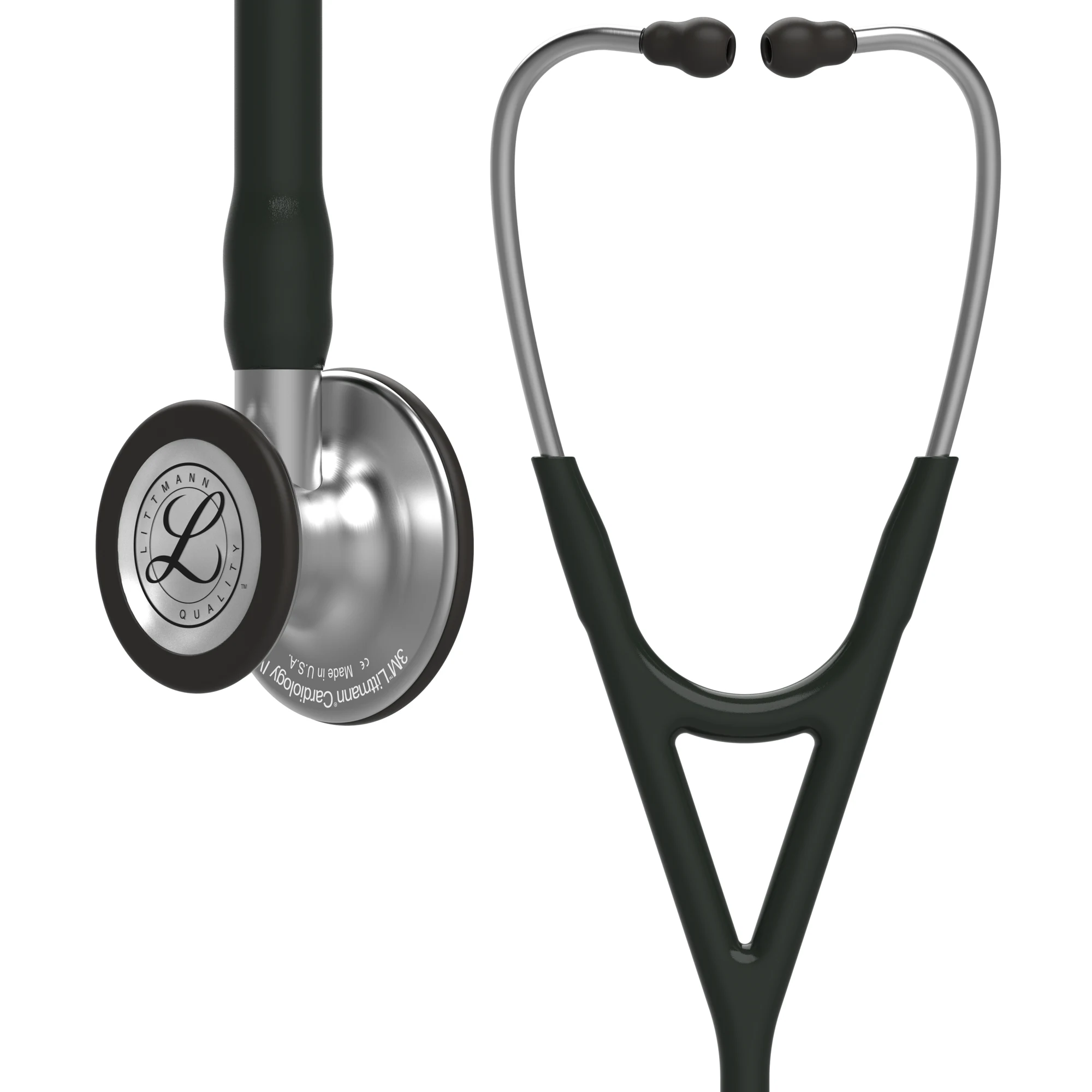 Most versatile Cardiology IVR4 549 | |
|---|---|---|
| Chestpiece | Single-sided stainless steel, one tunable diaphragm | Dual-sided stainless steel, tunable adult and paediatric diaphragms |
| Bell | No separate bell: light pressure on the diaphragm gives low frequencies | Paediatric side converts to a traditional open bell |
| Compared with the Classic III | Not stated by Littmann | Chestpiece 40% larger, bell 60% deeper |
| Tubing | Dual-lumen, 69 cm | Dual-lumen, 69 cm |
| Spare parts kit | Littmann 40011 | Littmann 40016 (black) or 40017 (grey) |
| Warranty | 7 years | 7 years |
| Made in | USA | USA |
Our verdict
For most doctors the Cardiology IV: it does everything the Master Cardiology does on the adult side, then adds a paediatric diaphragm and an open bell.
The chestpiece is the whole decision
Master Cardiology: one side, one diaphragm
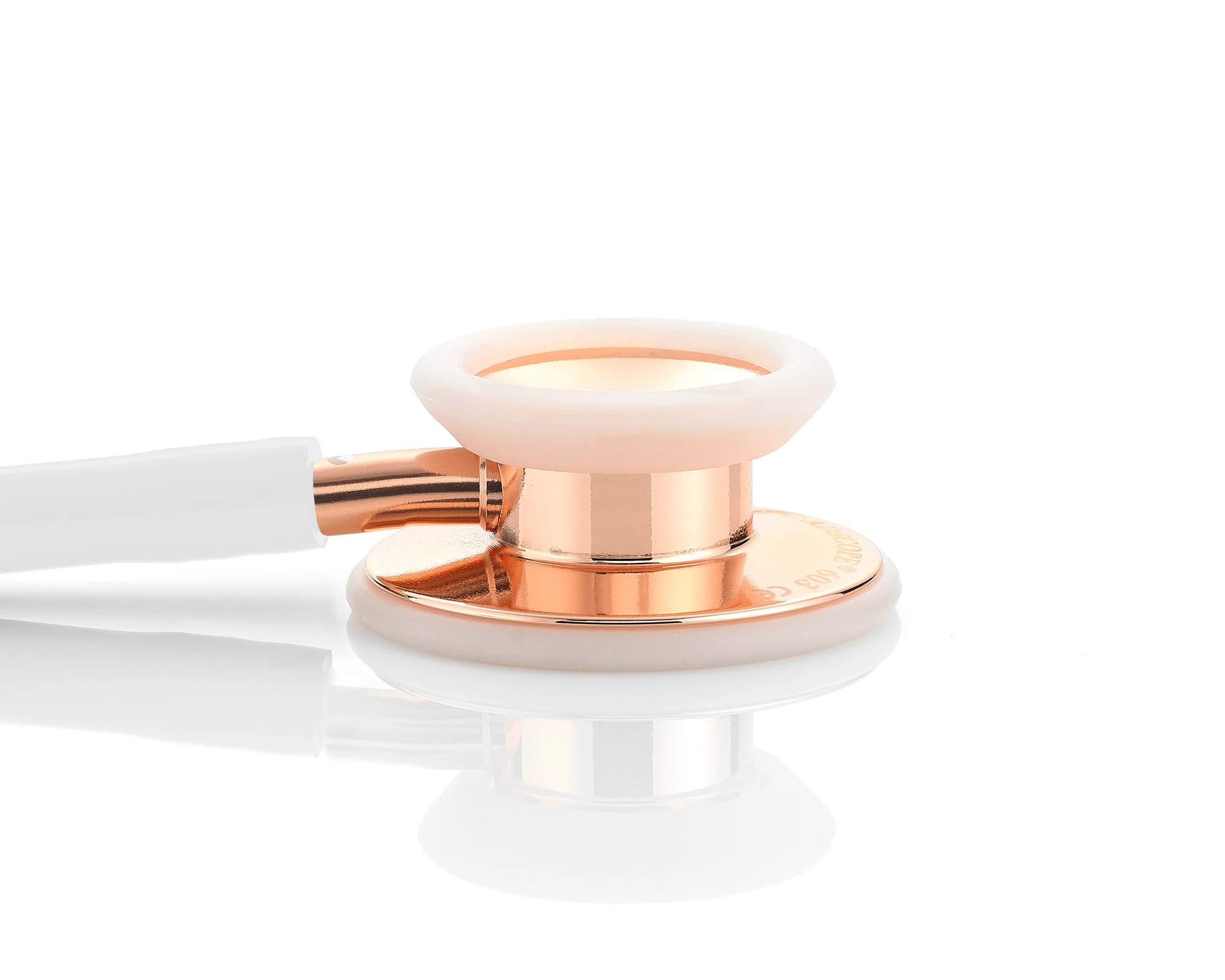
The Master Cardiology has a single-sided chestpiece with a tunable diaphragm. Hold it with light pressure and you hear low-frequency sounds, the ones you would traditionally listen for with the bell. Press a little more firmly and you hear high-frequency sounds. You move between the two without lifting the chestpiece or turning it over, which keeps your rhythm as you work across the praecordium.
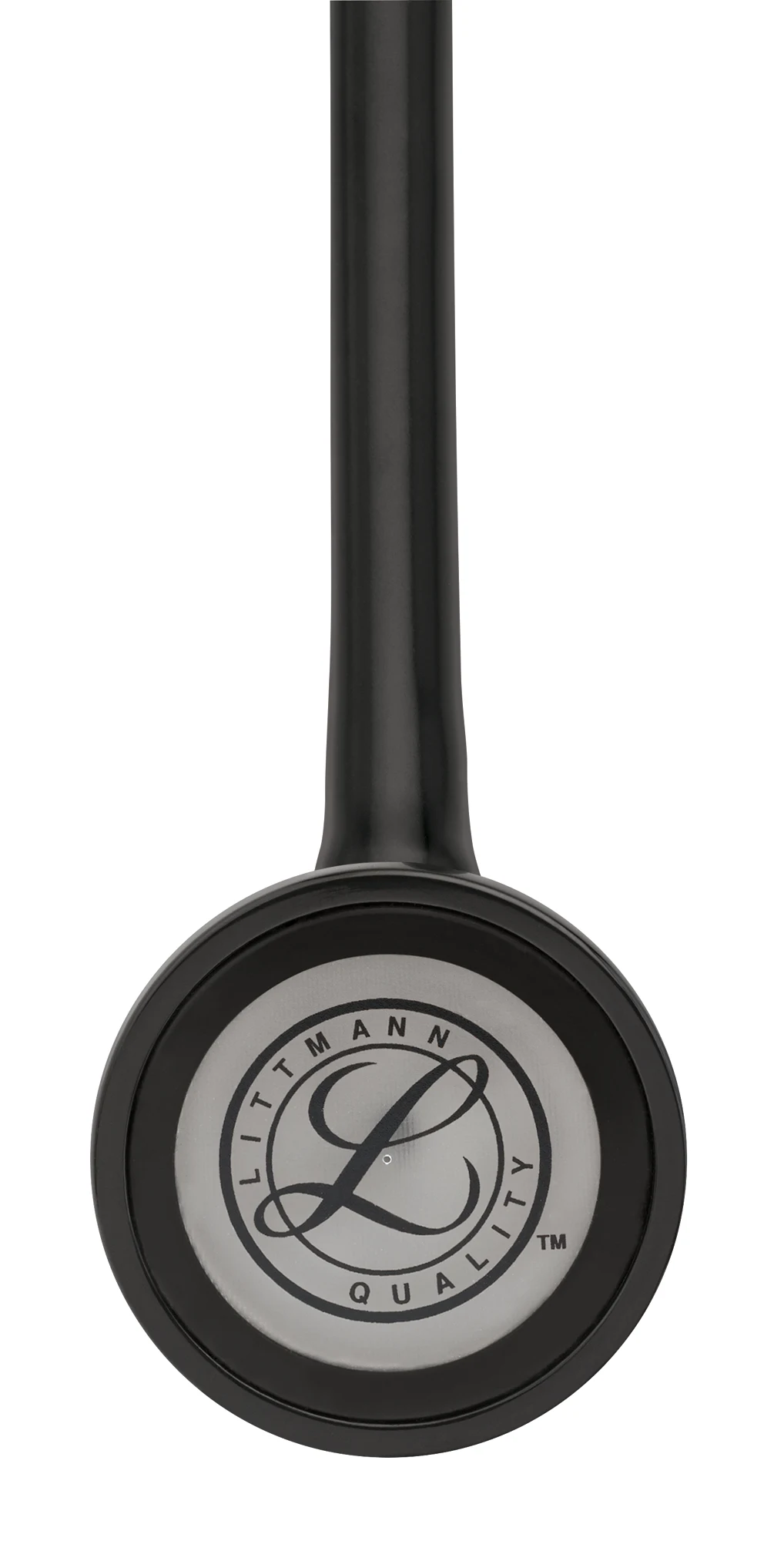
The trade-off is that there is only one diaphragm size: no small paediatric side and no open bell. In the box you get large and small soft-sealing eartips and a Special Procedures Adapter. The headset tension can be adjusted by squeezing the eartubes together or pulling them apart.
Cardiology IV: two sides, two sizes
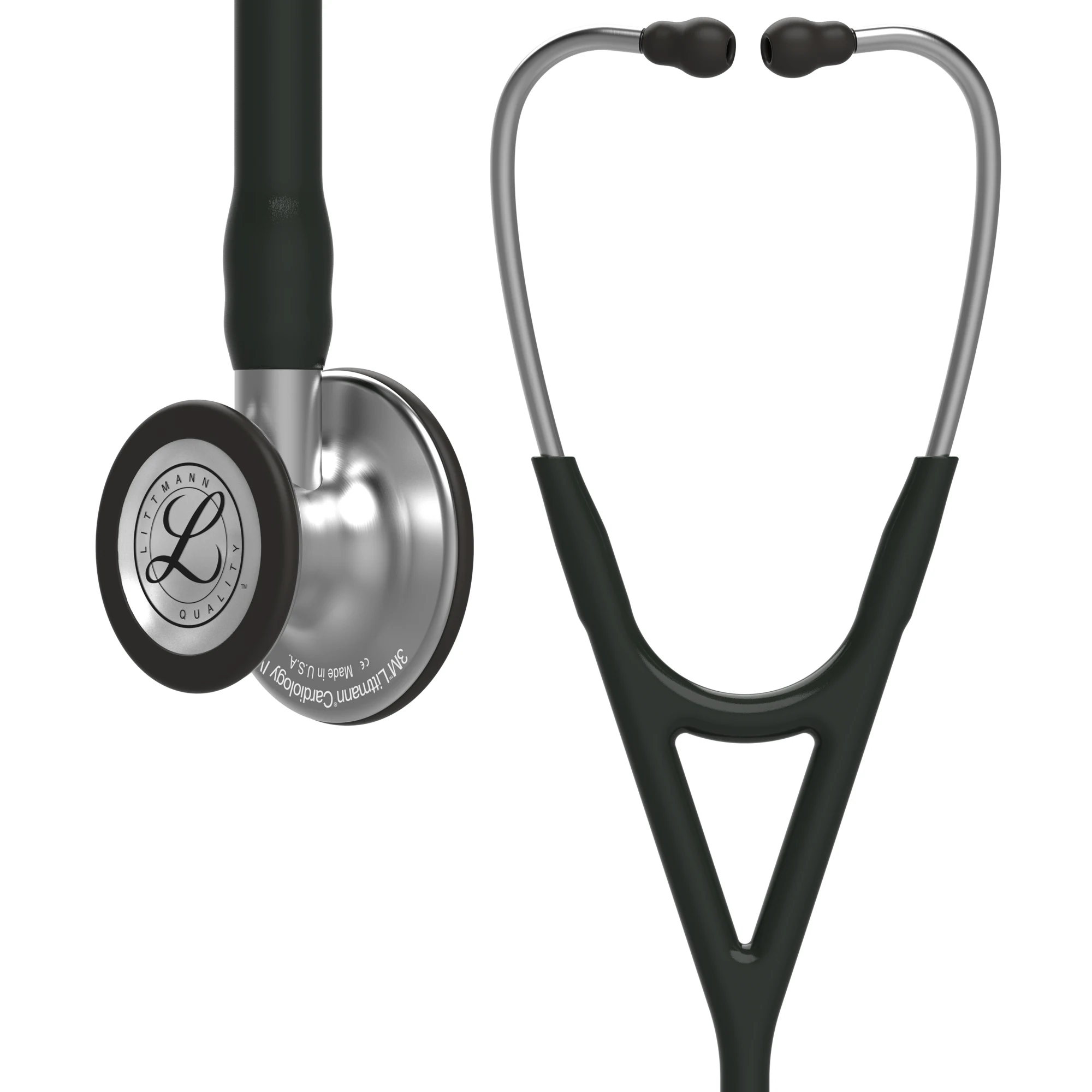
The Cardiology IV has a tunable diaphragm on both the adult and paediatric sides. The adult side works like the Master's: light pressure for low frequencies, firmer pressure for high. The smaller paediatric side fits children, slim adults and the carotid area, and it converts to a traditional open bell with a non-chill sleeve.
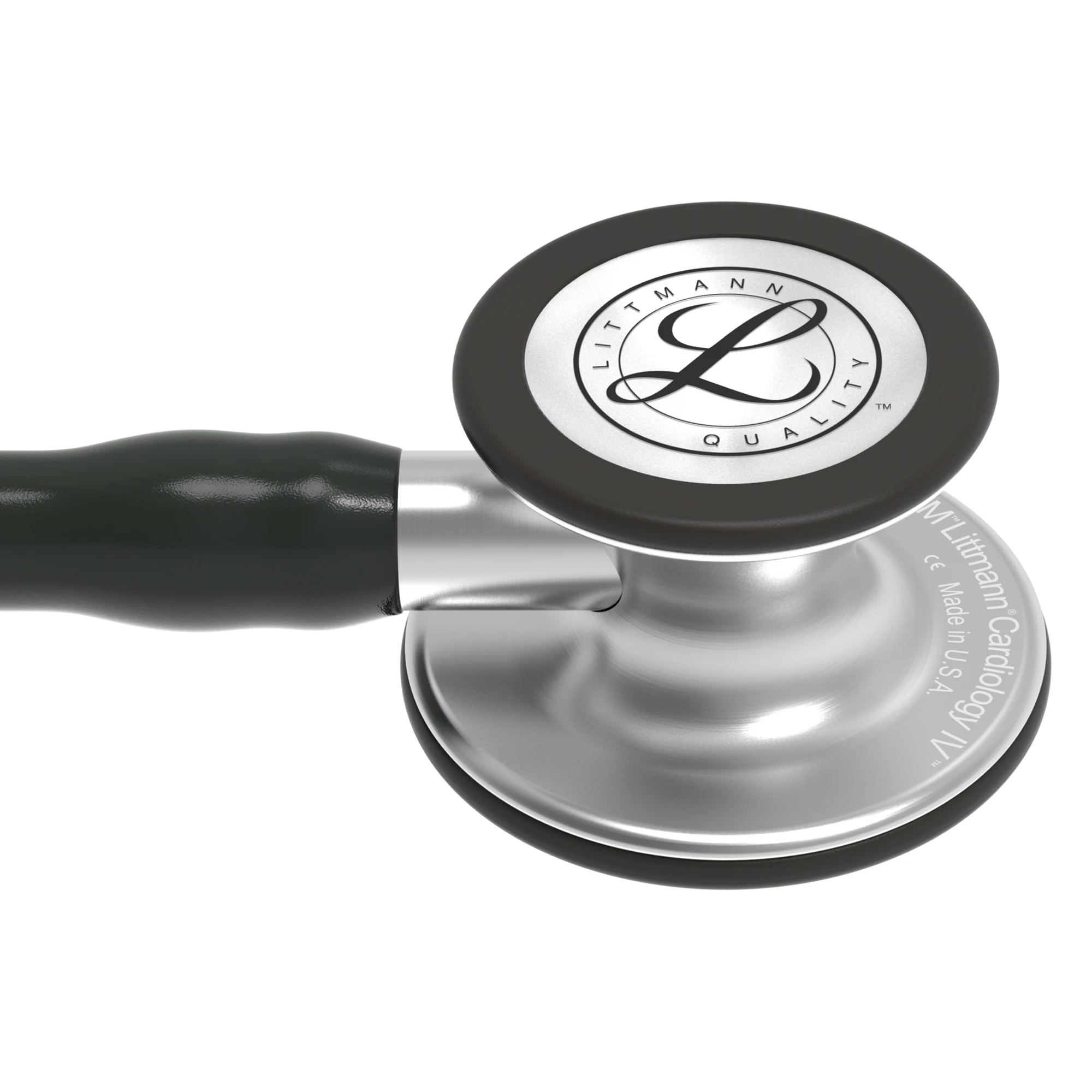
Littmann makes the Cardiology IV chestpiece 40% larger and its bell 60% deeper than the Classic III's. It is positioned for hard-to-hear sounds such as aortic stenosis, S3 gallops and faint pulmonary sounds, in the emergency department, ICU, cardiac ICU and step-down units.
Which is the best cardiology stethoscope?
For most doctors, the Cardiology IV. In South Africa, where interns and community service doctors see adults, children and everything in between in the same casualty shift, a paediatric side and an open bell count for more than a one-sided chestpiece.
Master Cardiology: who it suits
Why you’d buy it
- You work mainly with adults: adult cardiology, internal medicine, or a practice with few children.
- You like one flat chestpiece and never want to turn it over mid-examination.
- You value setting the headset tension yourself.
Think twice if
- Only one diaphragm size, so no small side for children or carotids.
- No open bell if you were taught to use one.
Using a tunable diaphragm well
Light, then firm, at every area
Make a seal with light pressure
Just enough to seal the rim on the skin. This brings out low-frequency sounds: the third and fourth heart sounds and the rumbling diastolic murmur of mitral stenosis.
Press more firmly
Firmer pressure brings out high-frequency sounds: the first and second heart sounds, most regurgitant murmurs, and breath sounds.
Listen twice at each area
Once light and once firm, rather than pressing hard throughout. With the Master Cardiology this is the only way to hear low frequencies; with the Cardiology IV you can also turn to the open bell.
For the full technique, from earpiece angle to the four heart areas, see our step-by-step auscultation guide.
What they have in common
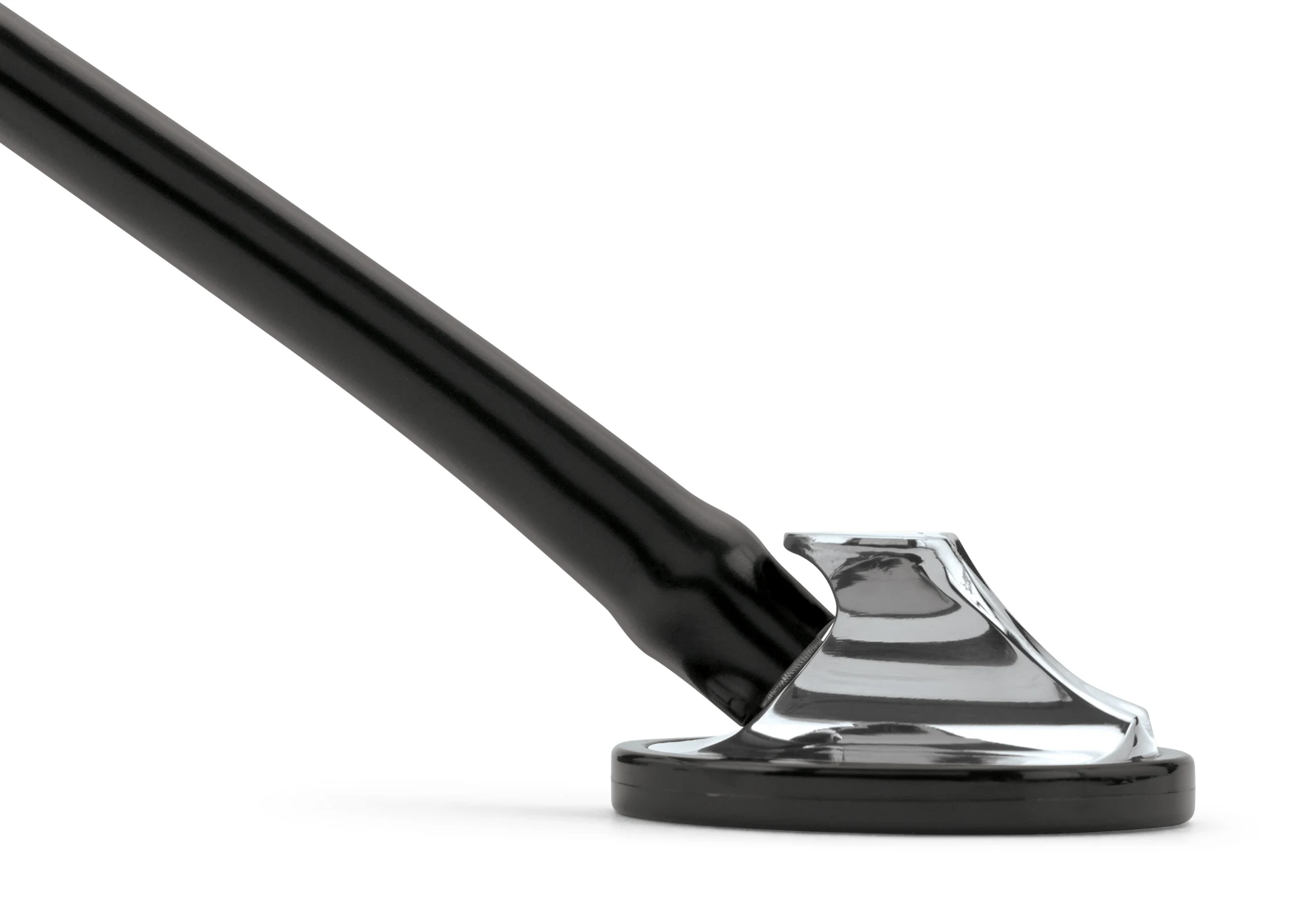
- Dual-lumen tubing: two sound paths inside one tube, so you do not get the rubbing noise of twin tubes.
- Tubing made without natural rubber latex.
- Soft-sealing eartips for comfort and a good acoustic seal.
- A 69 cm tube.
- A 7-year Littmann warranty. As an authorised Littmann distributor, our stock carries the full warranty.
Is a cardiology stethoscope worth it over a Classic III?
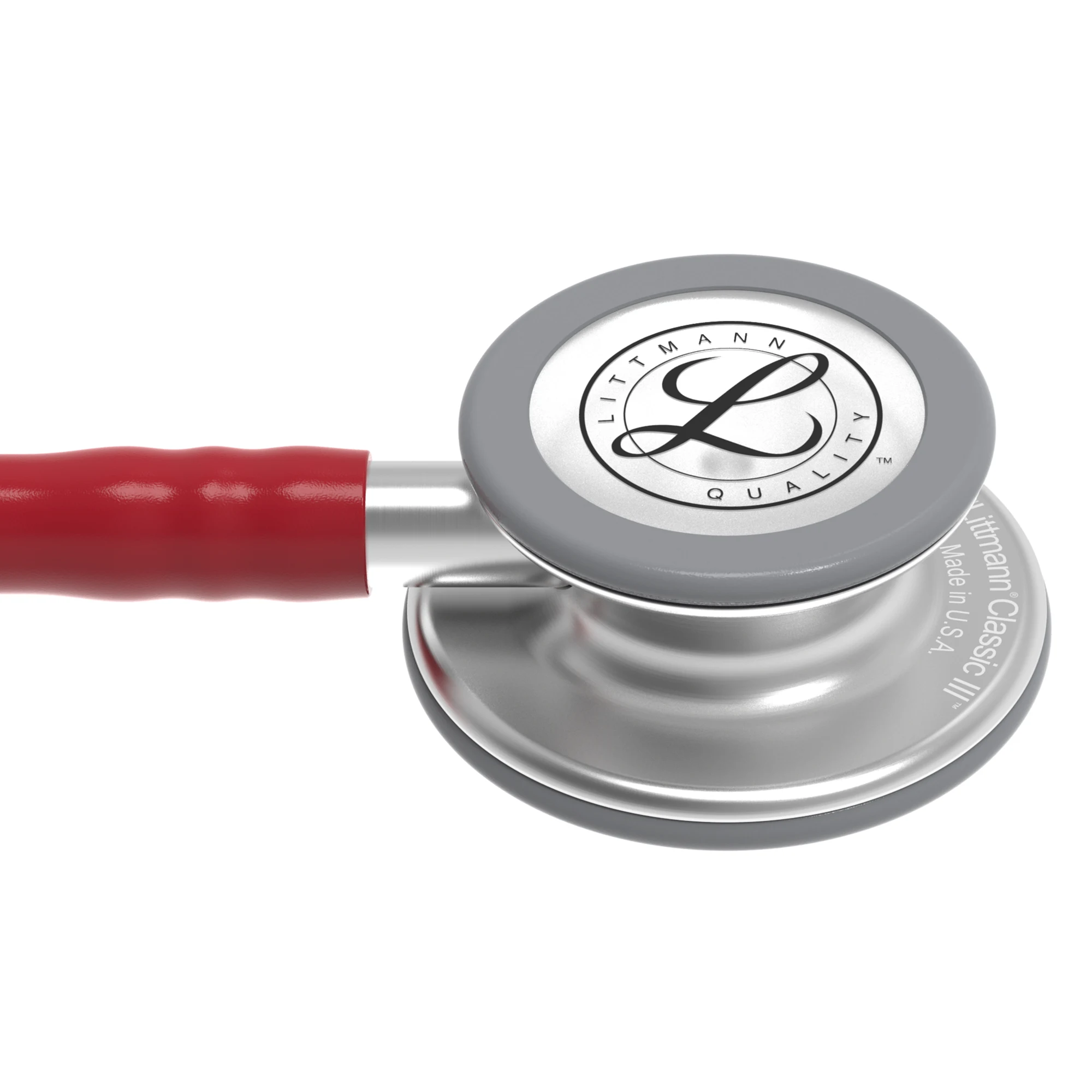
Not for everyone. The Classic III has tunable diaphragms on both sides, the same as the Cardiology IV, in a smaller chestpiece with single-lumen tubing and a 5-year warranty. For students and doctors in general wards it is enough. A cardiology-tier stethoscope earns its price when you regularly need to pick up faint murmurs, added sounds and subtle chest findings in noisy resus rooms and ICUs. We compare the two in Littmann Classic III vs Cardiology IV.
Colours and finishes
The Master Cardiology in black and stainless steel is the standard version; brass, smoke and all-black finishes also exist. Master Cardiology colours come and go, so check the category page for what is available.
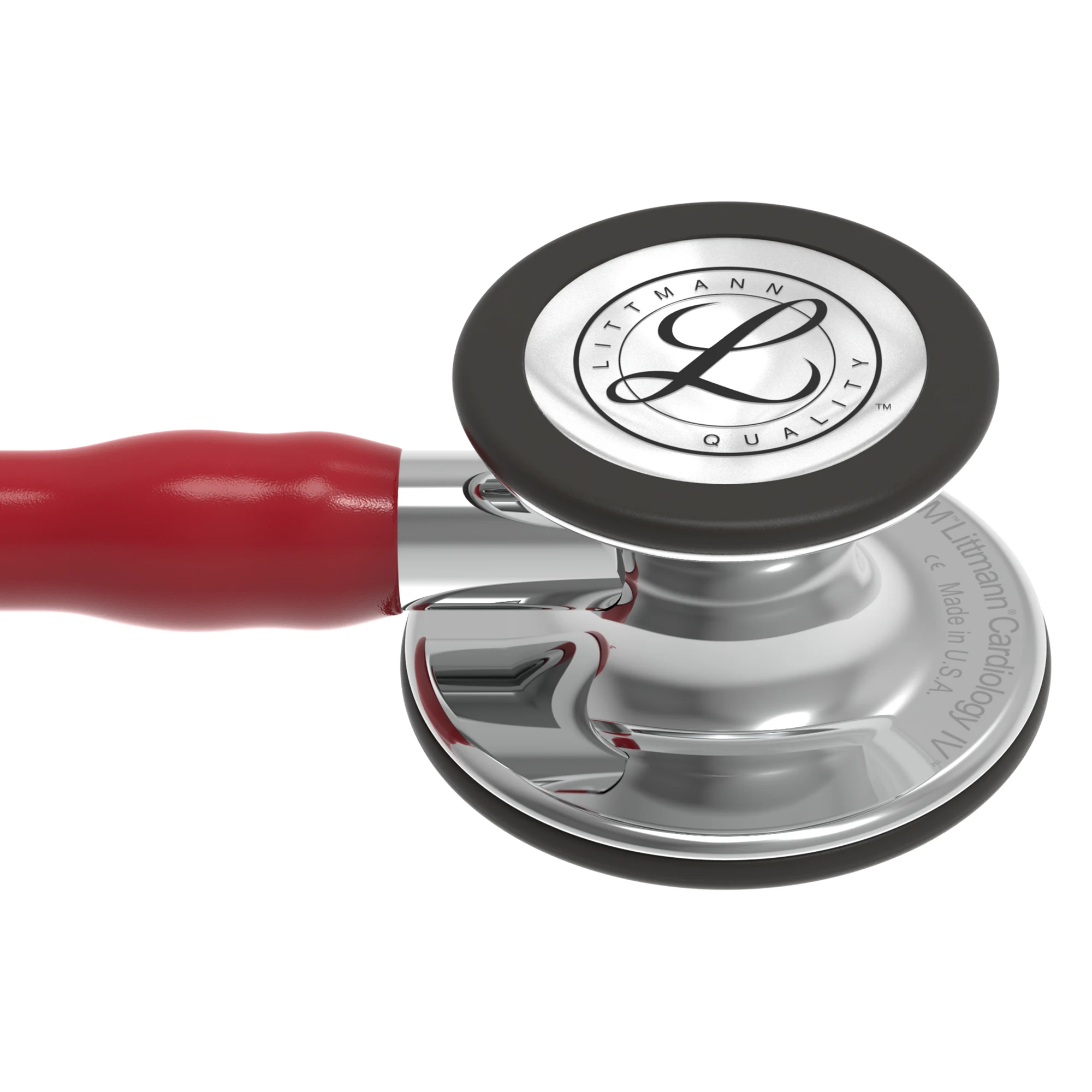
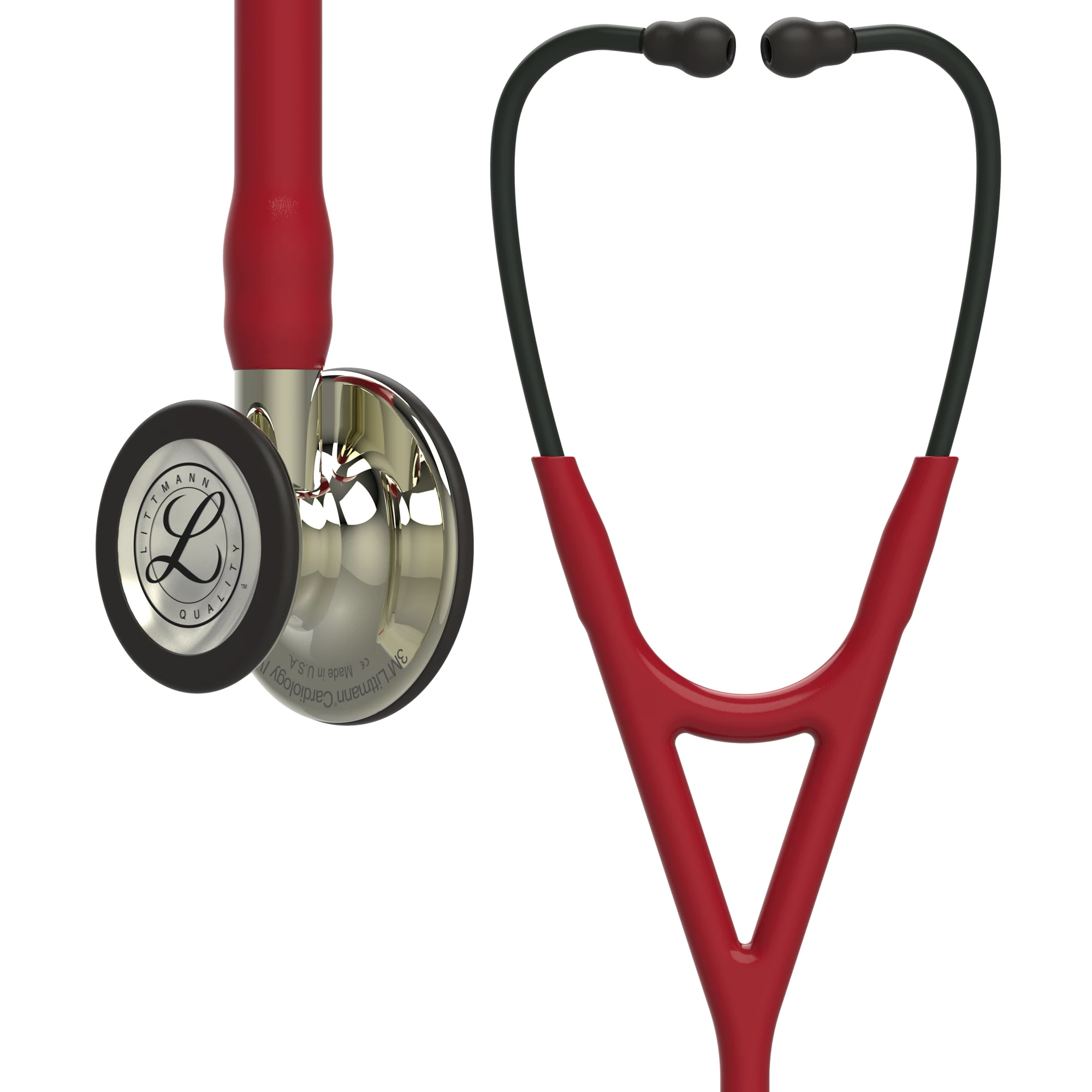
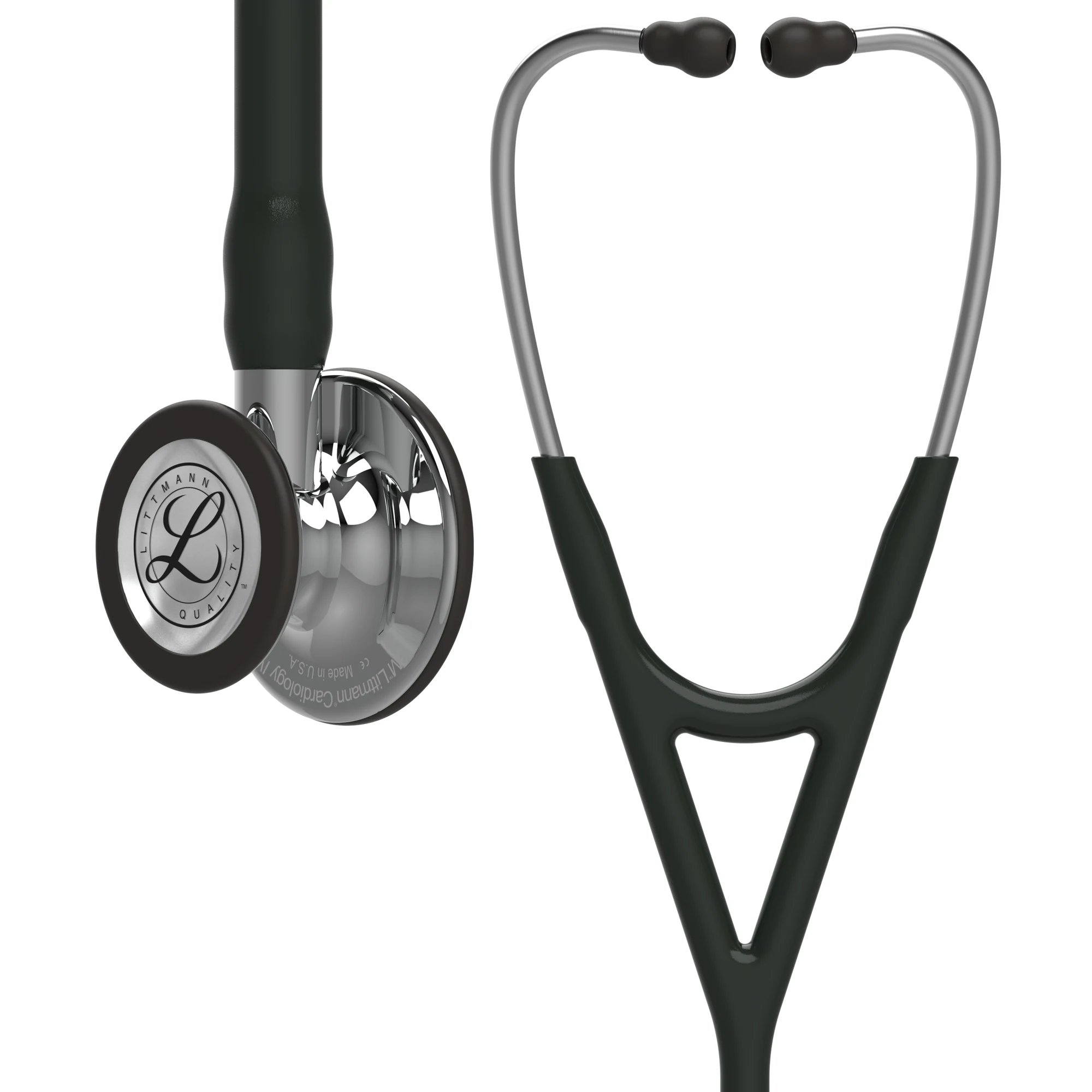
The Cardiology IV range is wider. The navy blue stainless steel version is the classic combination. For more colour, look at the burgundy with a mirror-finish chestpiece or the burgundy with a champagne finish. Limited editions with Satin Finish tubing, such as the alabaster with a black matte chestpiece, have the same acoustics in a softer, scratch-resistant tube.
Cardiology IV finishes in stock

Littmann Cardiology IV Stethoscopes
Littmann Cardiology IV - Burgundy - Mirror Finish Stethoscope
Littmann Cardiology IV Stethoscopes
Littmann Cardiology IV - Burgundy - Champagne Finish Stethoscope

Littmann Cardiology IV Stethoscopes
Limited Edition Littmann Cardiology IV - Alabaster - Black Matte Finish Stethoscope
Spares, engraving and buying
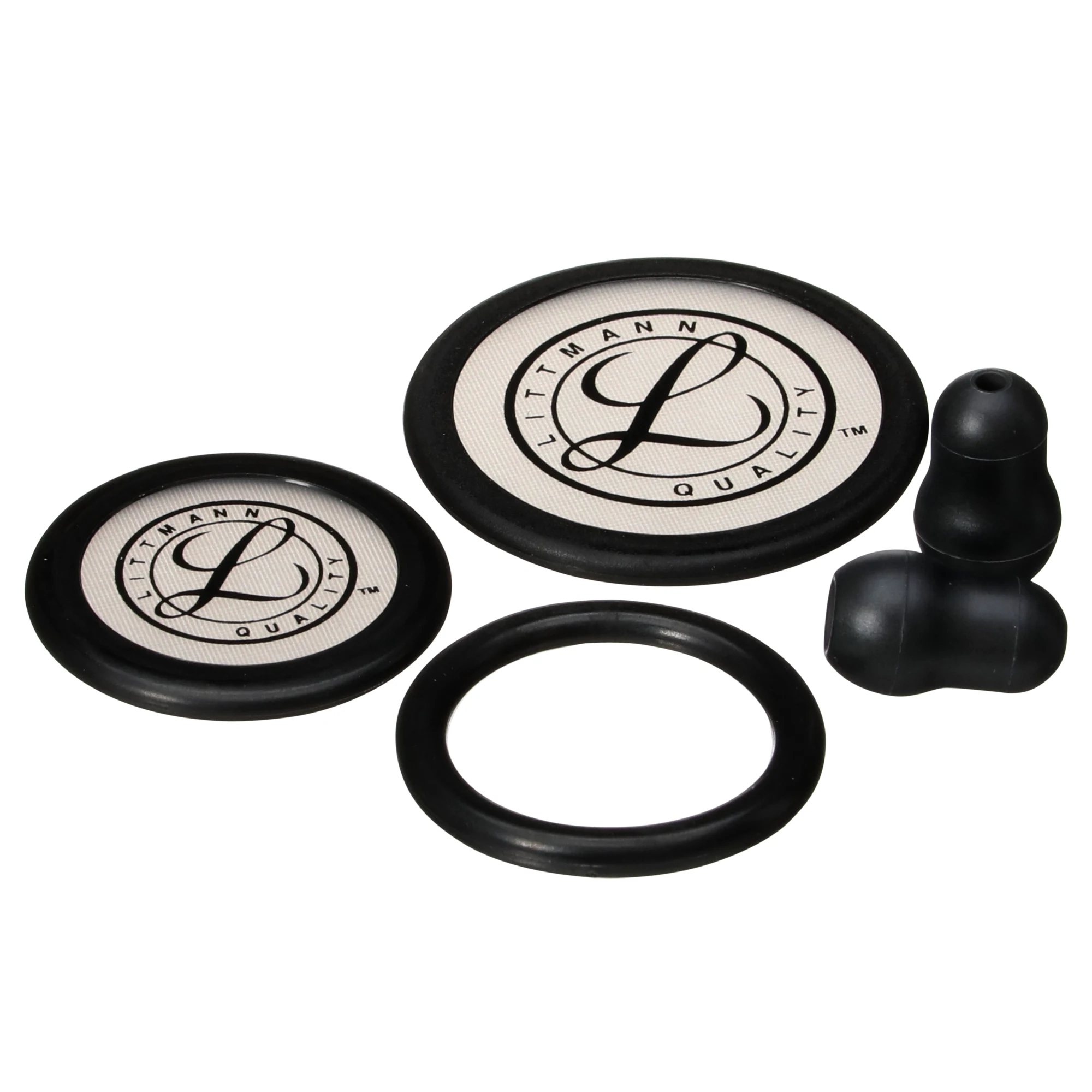
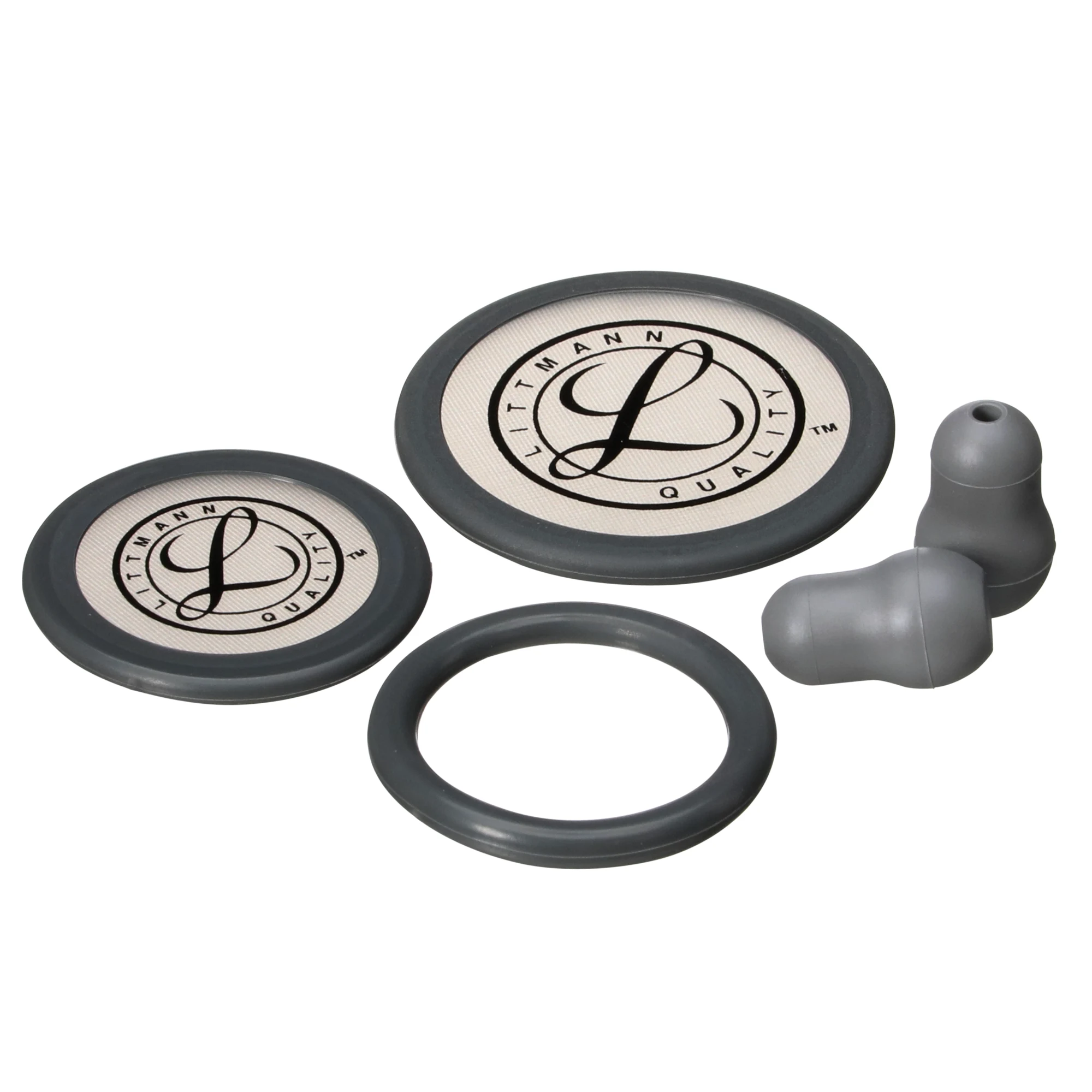
A worn diaphragm or split eartip does not mean a new stethoscope. The Master Cardiology spare parts kit (40011) gives you a new rim and tunable diaphragm assembly plus two small eartips. For the Cardiology IV, the 40016 kit replaces both diaphragms and includes eartips.
Spare parts kits

Littmann Spare Parts/Accessories
Littmann Stethoscope Spare Parts Kit - Classic III/Cardiology IV - Black
5.0 (1)
Littmann Spare Parts/Accessories
Littmann Stethoscope Spare Parts Kit - Classic III/Cardiology IV - Grey
We laser-engrave a name on the chestpiece of either model, usually on the same day, which makes a stethoscope left in a doctors' room easy to return to its owner. See examples in our engraving guide.
Questions people ask
What is the main difference between the Master Cardiology and Cardiology IV?
The chestpiece. The Master Cardiology is single-sided with one tunable diaphragm, so you never turn it over. The Cardiology IV is dual-sided, with tunable adult and paediatric diaphragms, and the paediatric side converts to an open bell.
Does the Master Cardiology have a bell?
Not a separate one. Its tunable diaphragm gives low-frequency sounds when held with light pressure and high-frequency sounds with firmer pressure, from the same side.
Which is better for paediatrics?
The Cardiology IV. Its smaller paediatric side suits children and thin adults and converts to an open bell. The Master Cardiology has only one diaphragm size.
Do they have the same warranty?
Yes. Both carry a 7-year Littmann warranty, and as an authorised Littmann distributor our stock carries the full warranty.
Do they use the same spare parts?
No. The Master Cardiology uses the Littmann 40011 kit. The Cardiology IV uses the 40016 (black) or 40017 (grey) kit, which also fits the Classic III.

Written by
Ashraf Moosa