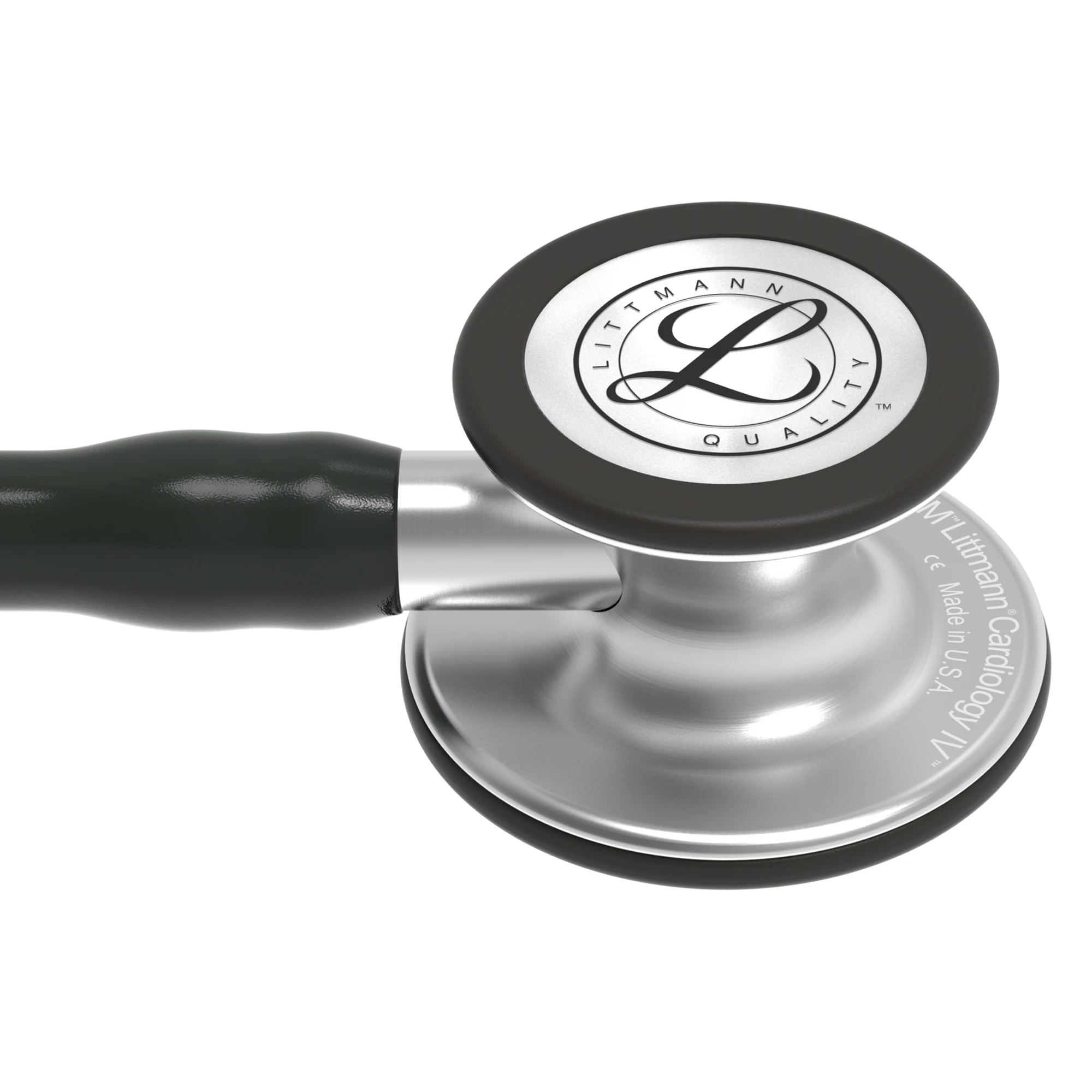
For most people checking their blood pressure at home, the most practical choice is an automatic upper-arm monitor with a cuff that fits your arm. Wrist monitors are smaller and easier to carry, but the reading depends on holding your wrist at heart level. Manual aneroid sphygmomanometers, used with a stethoscope, are what students and clinicians learn on and use on the ward.
The short answer
- Home monitoring: an automatic upper-arm monitor with a cuff range that includes your arm measurement.
- Travel or a large upper arm: a wrist monitor, used with your wrist supported at heart level.
- Students and clinicians: a manual aneroid set and your own stethoscope.
- The right cuff size and a steady routine matter as much as the device.
- Look for a published validation statement, such as ISO 81060-2, when you compare automatic monitors.
The three types of blood pressure monitor
There are three kinds of monitor on our shelves. They differ in how they take the reading, who they suit and what can go wrong.
Upper-arm vs wrist vs manual aneroid
 Restocking Automatic upper-armFrom R465 | 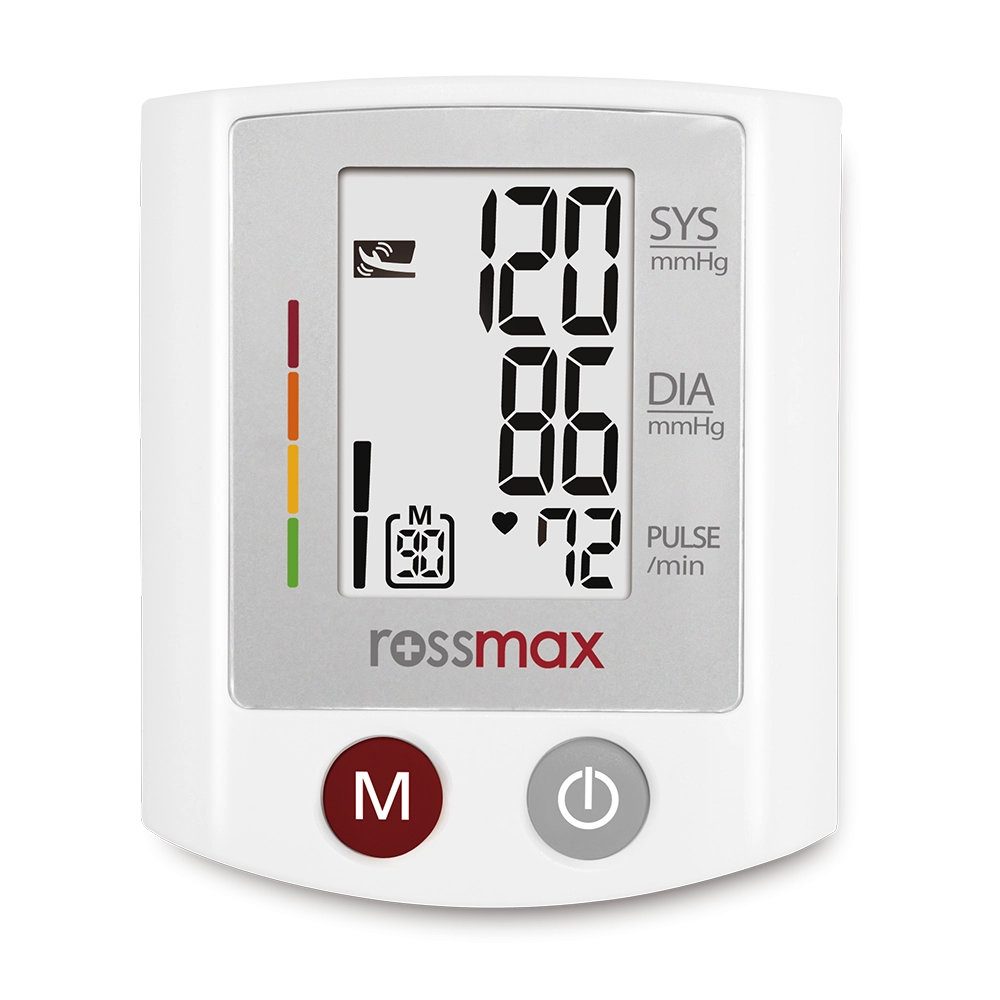 Most portable Automatic wristR549 | 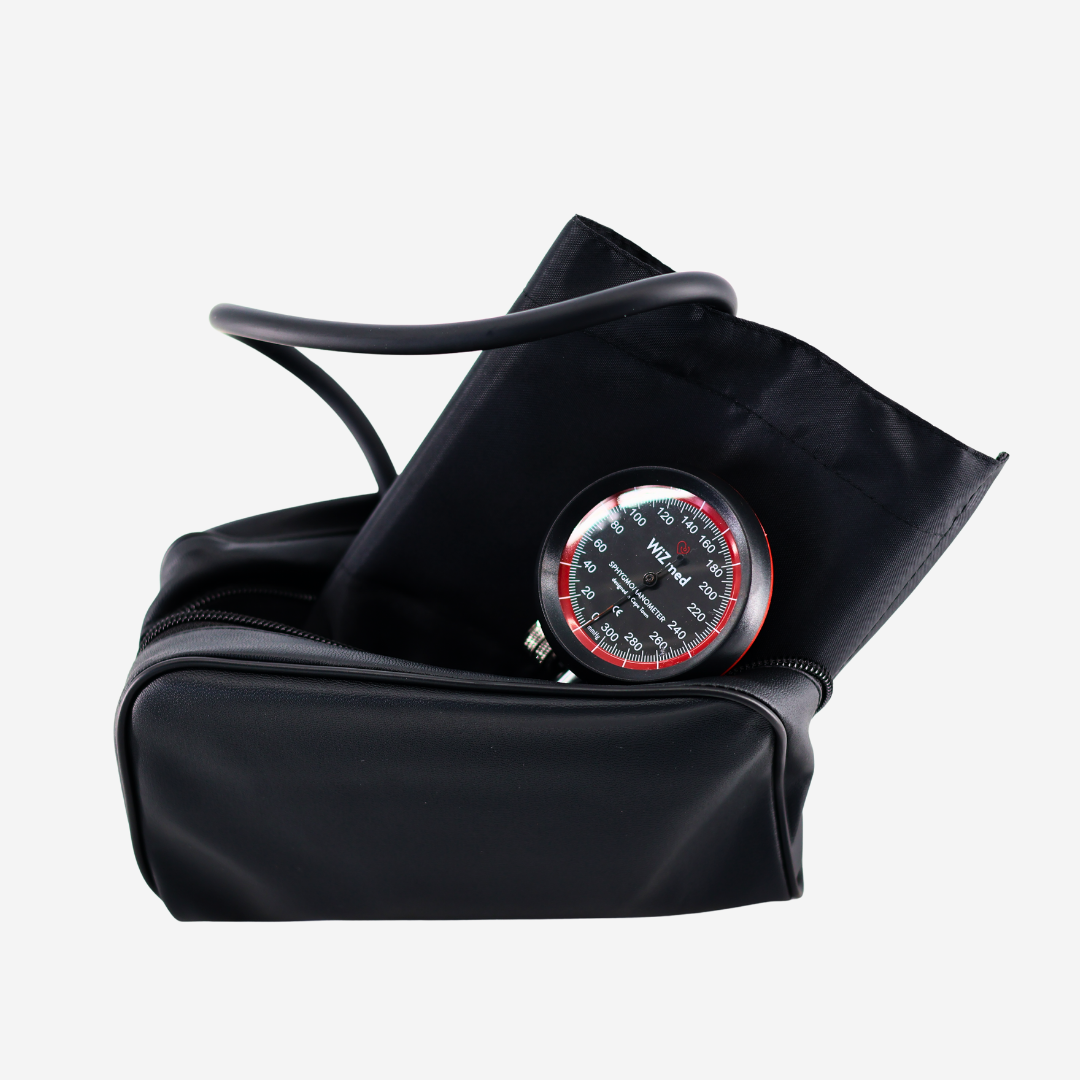 For students Manual aneroidR349 | |
|---|---|---|---|
| How it reads | Inflates and deflates itself, result on a screen | Cuff on the wrist, fully automatic | You inflate the cuff and listen for Korotkoff sounds |
| Stethoscope needed | No | No | Yes |
| Cuff | Cone cuff for arms of 22 to 42 cm | Wrist cuff, no arm cuff to pack | Adult D-ring cuff, 22 to 32 cm |
| Suits | Home monitoring, clinic desks | Handbag, travel, some larger upper arms | Students, nurses, doctors, screening |
| Watch out for | Cuff on bare skin at heart level | Wrist must be at heart level | Technique takes practice |
Our verdict
Upper-arm for most home users, wrist when portability matters most, and a manual set for anyone learning or working clinically.
Automatic upper-arm monitors
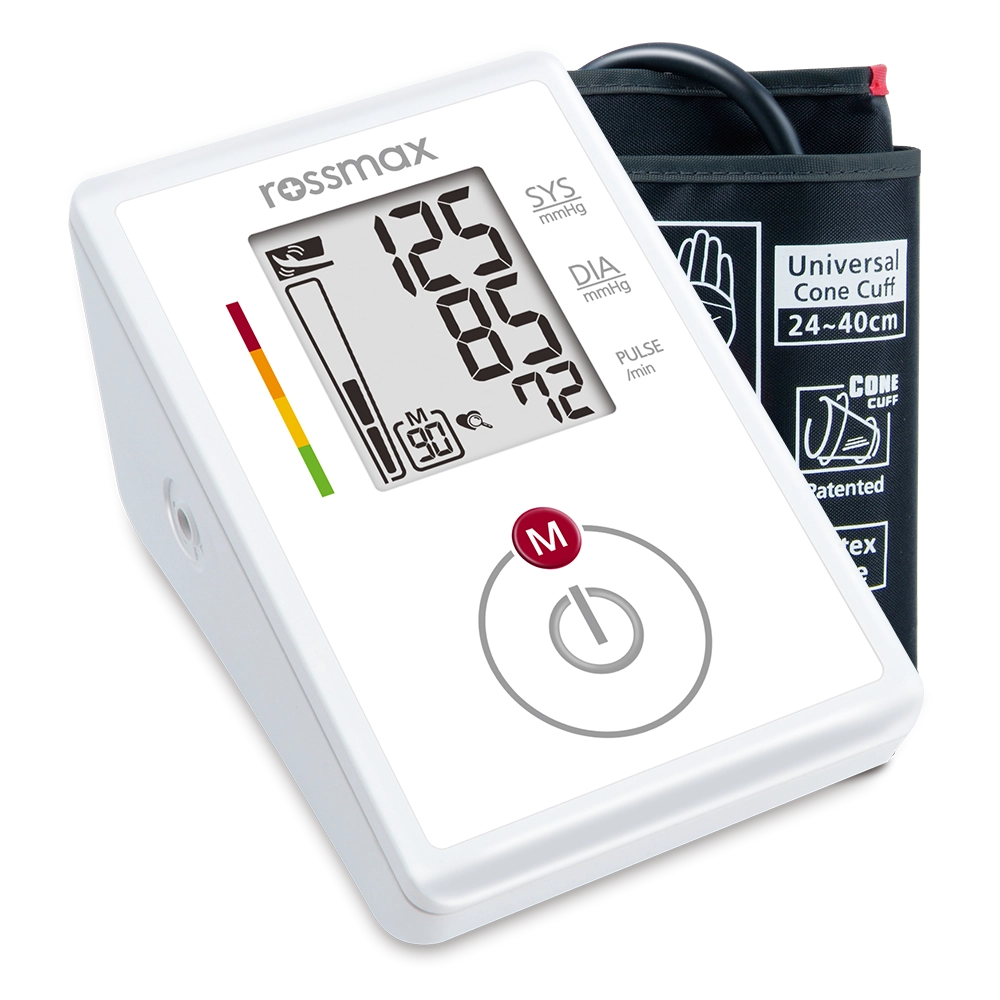
The Rossmax CH155F automatic upper-arm monitor is a one-touch monitor for home and clinic use. It is restocking at the time of writing; the product page has a "notify me" option that emails you once when it is back.
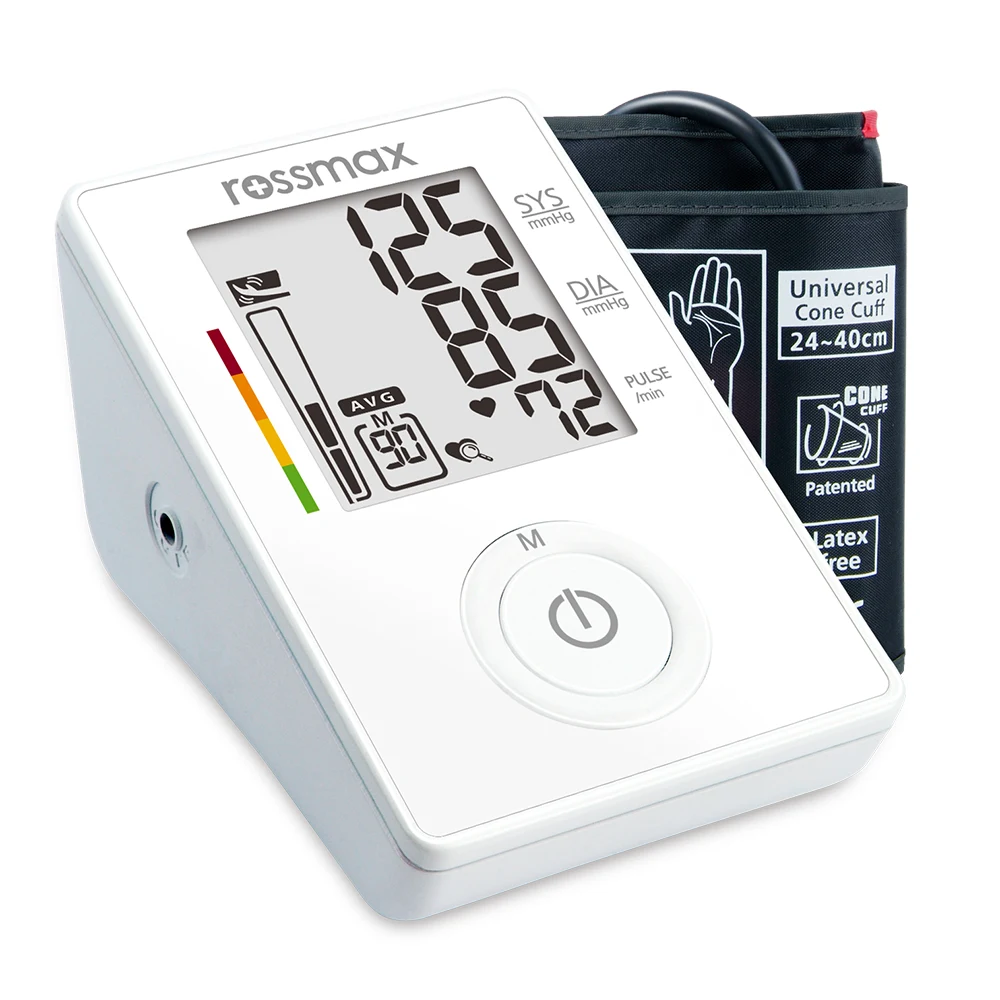
- Real Fuzzy inflation sets the inflation pressure from your systolic pressure and arm size, so there is nothing to pre-set.
- Movement detection shows an icon if you moved during the reading.
- Irregular heartbeat detection and a hypertension risk indicator.
- Memory: an average of the last three readings and a 90-reading memory.
- Power: four AAA batteries, or a version with an AC socket that runs from the separate Rossmax AC adaptor.
Wrist monitors
The Rossmax S150 wrist monitor is a compact automatic monitor. It uses Rossmax's Smart Sense system, with an electronic deflation valve that controls the deflation rate and reads the pulse while the pressure comes down. There is no separate arm cuff, so it is easy to keep in a handbag or take on a trip.
Manual aneroid sphygmomanometers
A manual set is a cuff, a bulb with a release valve and a gauge. You need a stethoscope to hear the Korotkoff sounds over the brachial artery, which is why every medical, nursing and physio student learns this way. If you need a stethoscope, see our guide to choosing your stethoscope.
| Set | Cuff | Worth knowing |
|---|---|---|
| WiZmed Sphygmomanometer | Adult, 22 to 32 cm | 0 to 300 mmHg in 2 mmHg steps, ±3 mmHg, latex-free bulb and bladder, calibration key, 2-year warranty |
| Generic Pocket Aneroid (economy) | Adult | 0 to 300 mmHg gauge, washable cuff, latex bulb and valve, vinyl zip case |
| Deluxe Generic Pocket Aneroid | Adult, range markings on the cuff | Latex-free bladder and bulb, zippered carry case |
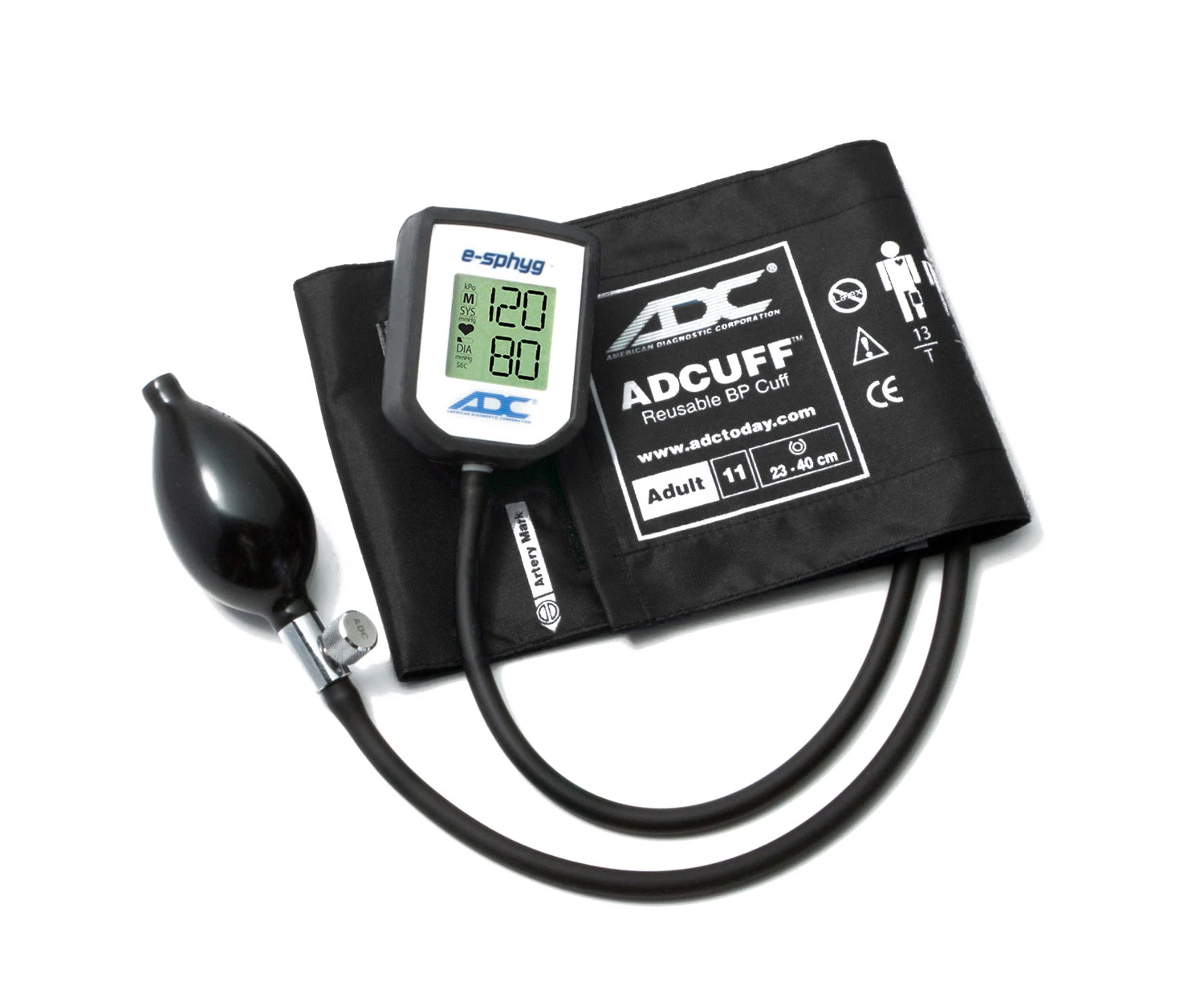
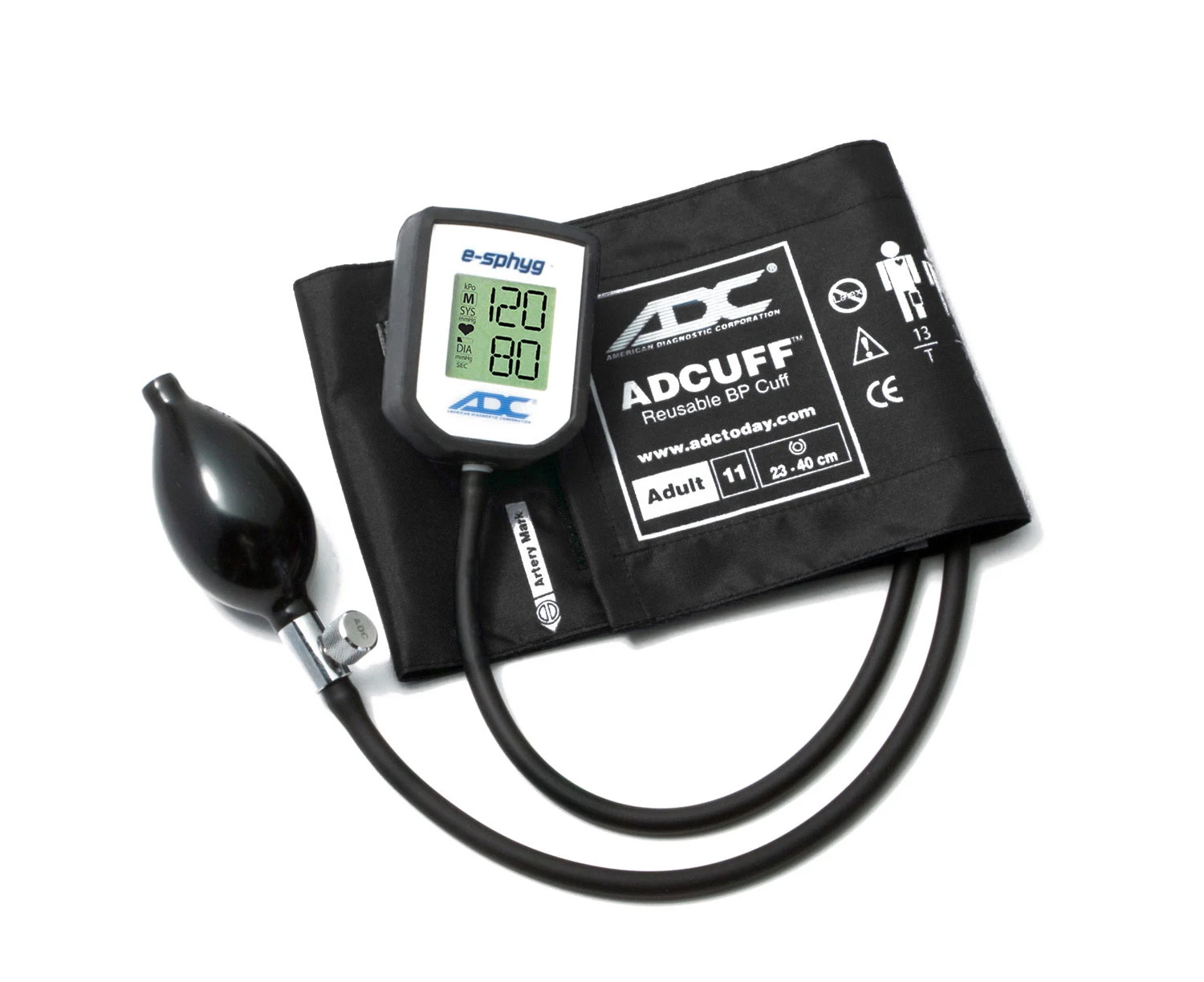
| ADC e-sphyg | Adult, 23 to 40 cm | Digital gauge, but you still listen with a stethoscope; backlit screen and systolic assist |
| ADC Diagnostix 703 | Adult, 23 to 40 cm | Palm aneroid with integral bulb and one-hand trigger valve |
| Welch Allyn DuraShock DS54 | FlexiPort adult cuff | Gear-free movement, ±3 mmHg, gauge on the cuff rotates 360° |
The economy generic set is the entry-level way to practise, and the deluxe generic set adds a latex-free bladder and range markings. The WiZmed Sphygmomanometer adds a calibration key and a 2-year warranty. The ADC e-sphyg, ADC 703 and Welch Allyn DS54 are premium sets built for daily use on the ward.
Manual sets in stock


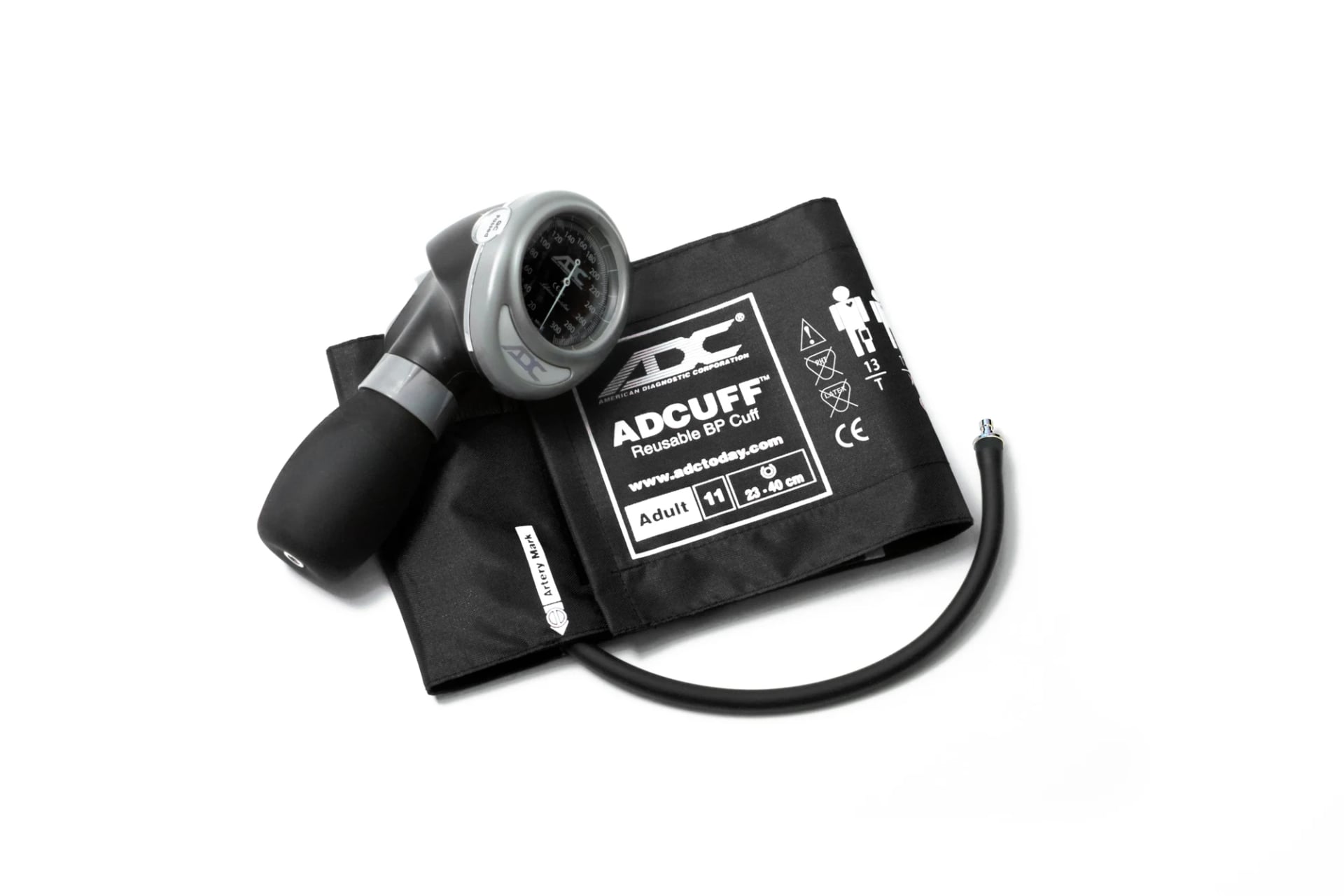

Blood pressure cuff sizes
The wrong cuff is the commonest cause of a wrong reading. A cuff that is too small tends to read too high; one that is too large tends to read too low.
Measure your arm for a cuff
Bare, relaxed arm
Sit with your arm relaxed and your sleeve off.
Find the midpoint
Halfway between the tip of the shoulder and the point of the elbow.
Measure around
Measure around the arm at that point in centimetres. A retractable measuring tape makes this easy.
Match the range
Choose a cuff whose printed range includes your measurement.
| Cuff | Arm circumference |
|---|---|
| WiZmed Sphygmomanometer adult cuff | 22 to 32 cm |
| ADC adult cuffs (e-sphyg, 700, 703, 775) | 23 to 40 cm |
| Rossmax CH155F cone cuff | 22 to 42 cm |
| Welch Allyn REUSE FlexiPort size 11 Adult | 25 to 34 cm |
| ADC Multikuf kit (small adult, adult, large adult) | 19 to 50 cm across three cuffs |
For clinics, the Welch Allyn REUSE FlexiPort cuffs come in size 11 Adult and size 12 Large Adult for Welch Allyn Spot, VSM and Atlas monitors. Browse every cuff and monitor in blood pressure machines and cuffs.
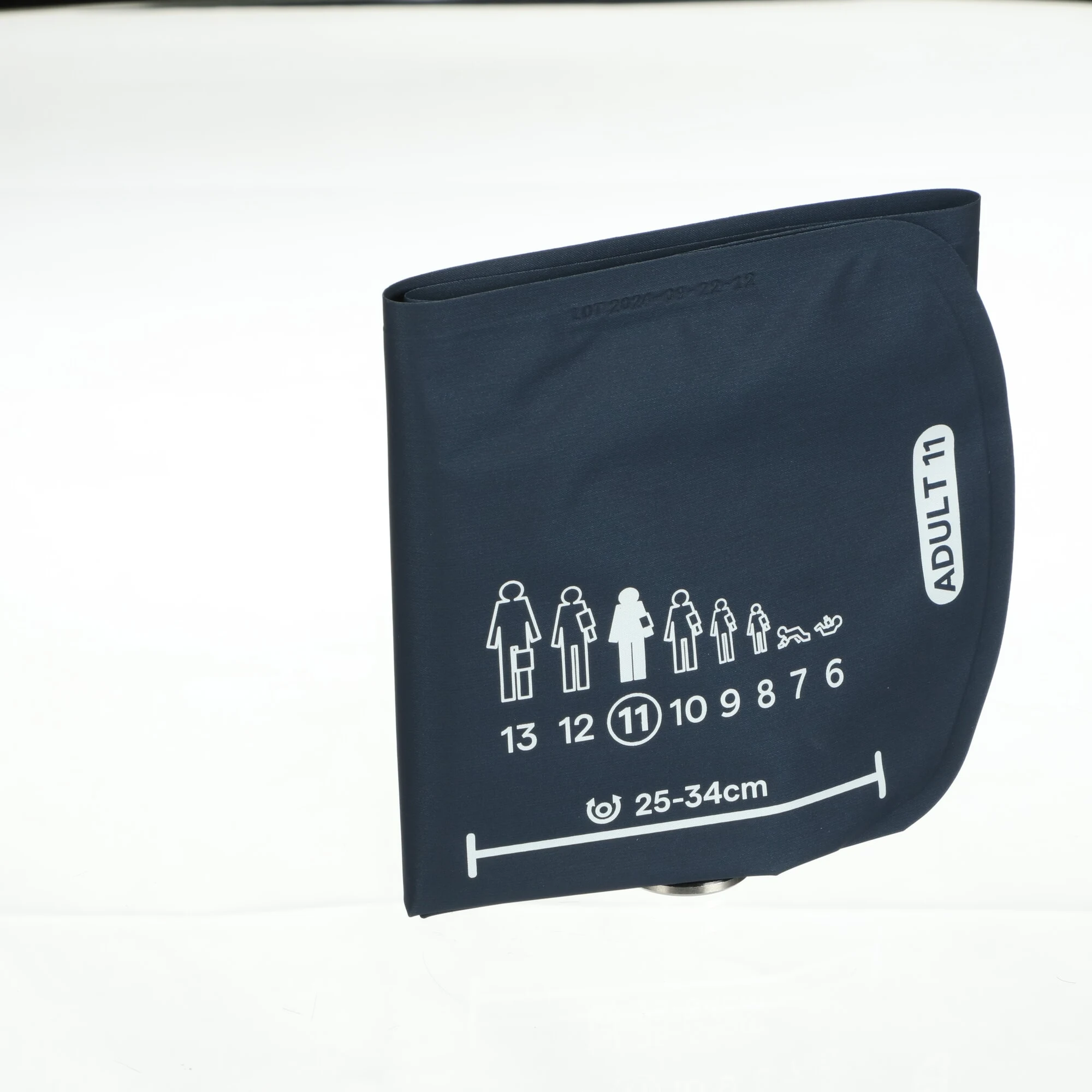
How to take an accurate home reading
A home reading you can trust
Prepare
Avoid caffeine, smoking and exercise for 30 minutes beforehand, and empty your bladder.
Sit and rest
Sit quietly for five minutes with your back supported, feet flat on the floor and legs uncrossed.
Support your arm
Rest your arm on a table so the cuff is at the level of your heart.
Cuff on bare skin
Not over a sleeve, with the artery marker over the inside of the elbow.
Stay still and quiet
Do not talk or move while it measures.
Take two readings
A minute apart, and write both down.
Keep a routine
Measure at the same times each day, for example morning and evening, and take your log to your doctor or clinic.
Using a Rossmax monitor
Follow the manual in the box. In outline, for the CH155F: put in four AAA batteries or connect the adaptor on the AC-socket version, fit the cuff on your upper arm, sit as described above and press start once. Real Fuzzy inflation means you do not set a pressure. If the movement icon appears, sit still and repeat. For the S150 wrist monitor, the same routine applies, with your wrist supported at heart level.
Rossmax vs Omron: what to compare
We stock Rossmax and not Omron, so we cannot compare specific models side by side from our own shelf. When you compare any two automatic monitors, look at the same few things:
- Published validation: whether the maker states the monitor meets a recognised protocol such as ISO 81060-2 or the ESH criteria.
- Cuff range: whether the cuff fits your arm circumference, not just "adult".
- Memory and averaging: useful if you keep a log for your doctor.
- Power: batteries only, or a mains adaptor option for a clinic desk.
- Movement and irregular heartbeat alerts: these tell you when to repeat a reading.
For students learning manual blood pressure
Clinical skills training teaches the manual method first, with your own stethoscope, so a manual set is the one to buy first. Our step-by-step guide to blood pressure measurement with a sphygmomanometer walks through cuff placement, inflation and the Korotkoff sounds. The Ward Kit puts the WiZmed aneroid set together with a pupil torch, Babinsky hammer, tourniquet, measuring tape and ECG ruler, and our medical student equipment list covers the rest.
Questions people ask
Which is the best home blood pressure monitor in South Africa?
For most people, an automatic upper-arm monitor with a cuff that fits their arm and a published validation statement is the most practical home choice. Wrist monitors are more portable but depend on holding the wrist at heart level. Our Rossmax CH155F upper-arm monitor is restocking at the time of writing.
Are wrist blood pressure monitors accurate?
They can give a useful reading when used correctly, but they are more sensitive to position than upper-arm monitors. Keep your wrist supported at heart level, sit still and follow the same routine every time. If your readings vary a lot, ask your clinic to check them against an upper-arm reading.
What size blood pressure cuff do I need?
Measure around the middle of your upper arm, halfway between shoulder and elbow, in centimetres, and choose a cuff whose printed range includes that number. For example, the WiZmed adult cuff fits 22 to 32 cm and ADC adult cuffs fit 23 to 40 cm.
Do I need a stethoscope with a sphygmomanometer?
Yes, for a manual aneroid set. You listen for the Korotkoff sounds over the brachial artery with a stethoscope while the cuff deflates. Automatic upper-arm and wrist monitors do not need one.
Is Rossmax better than Omron?
We stock Rossmax, not Omron, so we cannot compare models side by side. Compare any two monitors on published validation, cuff range for your arm, memory, power options and movement or irregular heartbeat alerts.

Written by
Ashraf Moosa